
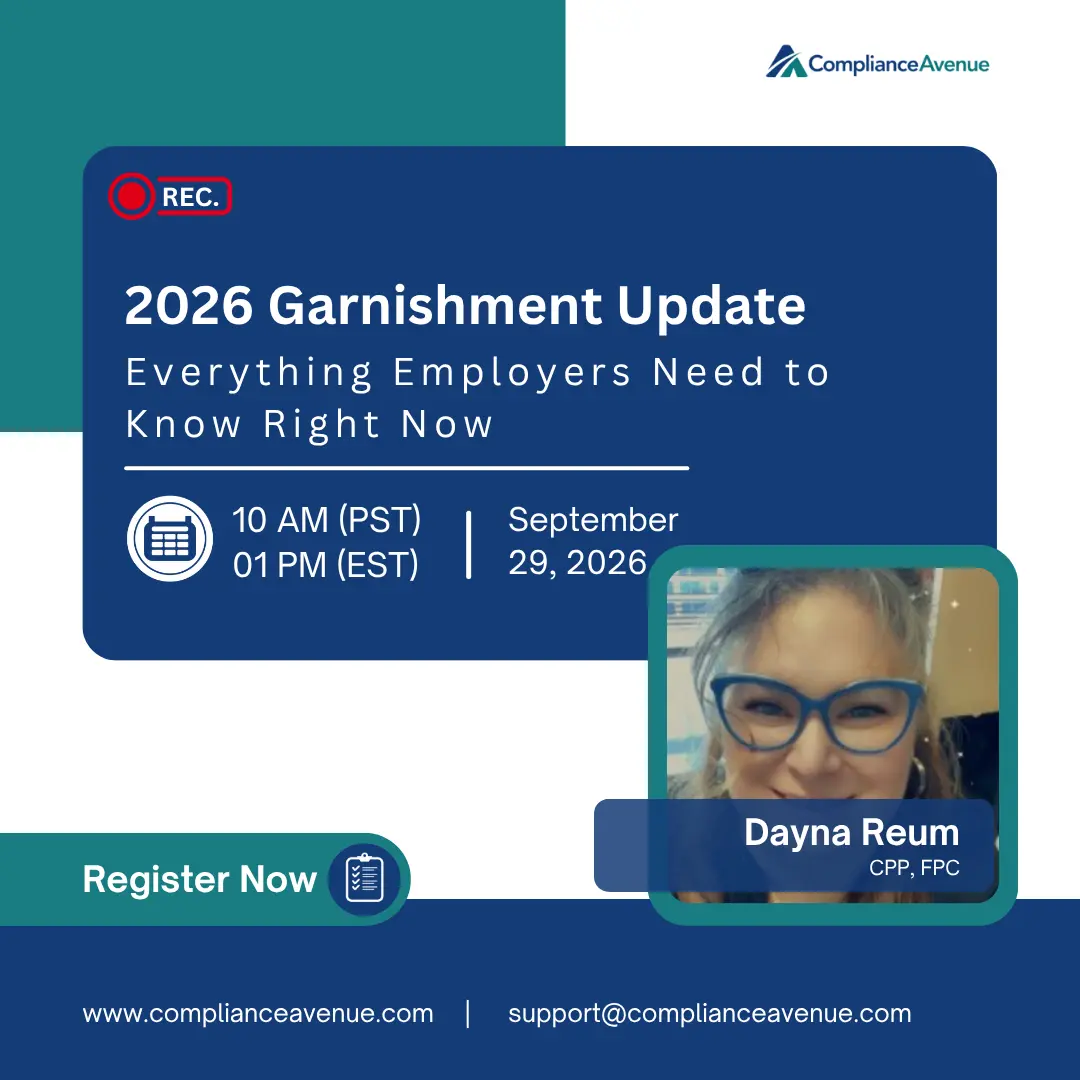
⚠️ One garnishment mistake can cost your company thousands in penalties and legal fees.
Overview
Garnishments are a requirement of doing business and having employees — but juggling the requirements of different types of garnishments and federal and state laws can be exhausting.
This webinar will give you the tips and tools to know how to stay compliant and process garnishments correctly. You’ll also learn about the challenges and risks employers face when not properly handling garnishments — and how the recent 2026 tax reform has directly impacted garnishment rules that every employer must now follow.
Whether you’re handling child support orders, federal tax levies, creditor garnishments, or state-specific requirements — this session covers it all in one place.
WHO SHOULD ATTEND
This webinar is designed for:
- Payroll Managers & Specialists
- HR Professionals & Directors
- Compliance Officers
- Controllers & Accounting Professionals
- Office Managers handling payroll
- Business Owners with employees
WHAT YOU WILL LEARN
By the end of this session, you will:
✅ Better understand your employer responsibilities when it comes to garnishments
✅ Know how to properly calculate garnishment deductions — according to the law, the order, or both
✅ Understand lump sum reporting requirements and how to comply
✅ Know the proper order of garnishment priority when you receive multiple orders
✅ Confidently determine which law to follow — state or federal — in every situation
WEBINAR AGENDA
Part 1 — Child Support Review
- Employer Responsibility & Employee Protections
- Priority of Withholding & Multiple Orders
- Child Support Withholding Requirements
- Defining Income & Calculating Disposable Pay
- Lump Sum Payments
- Calculating Child Support Payments
- When to Remit Payments
- Administrative Fees
- Handling Terminated Employees
- E-IWO (Electronic Income Withholding Orders)
- Other Child Support Concerns
- Medical Support Orders
- Details of State Requirements
Part 2 — Levy Review
- Federal Tax Levies
- Forms
- Priorities
- Calculating Deductions
- Special Situations
- Remittance Requirements
- Voluntary Deductions
- Other Federal Garnishments / CARES Act
- State Tax Levies
- Requirements
- State Laws
- Creditor Garnishments
WHY ATTEND NOW
The 2026 tax reform has directly impacted how garnishments must be processed. Employers who don’t update their garnishment procedures risk:
- 🔴 IRS penalties for incorrect federal tax levy calculations
- 🔴 State fines for improper child support withholding
- 🔴 Employee lawsuits for garnishment errors
- 🔴 Liability for releasing garnishments incorrectly
Don’t wait until you receive an audit notice. Get compliant now.
FREE BONUS FOR ATTENDEES
🎁 Free Compliance Tool: Garnishment Priority Checklist — A quick reference guide for handling multiple garnishment orders correctly (valued at $49, yours FREE with registration)


Reviews
There are no reviews yet.