
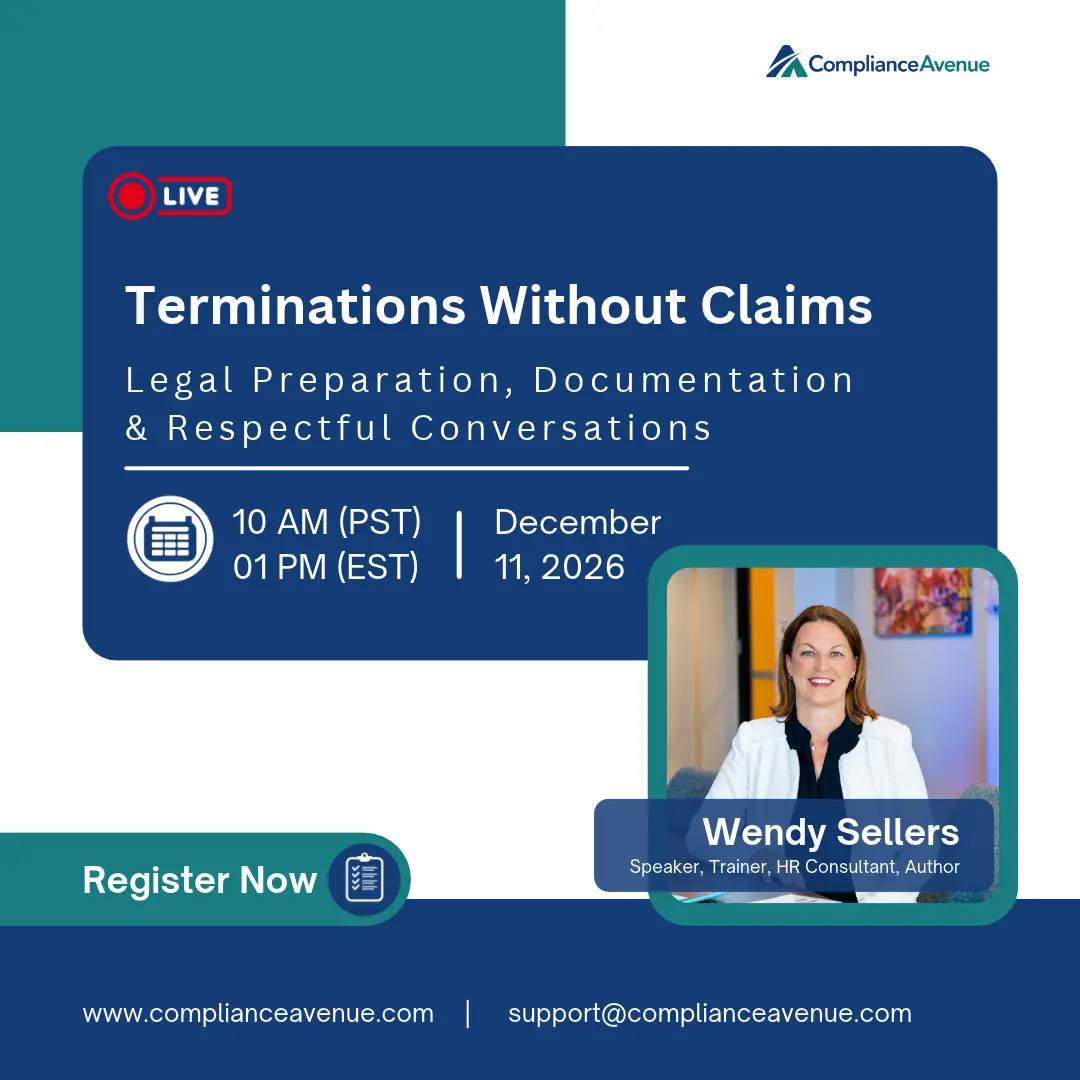
Handle sensitive situations such as terminations with grace and without legal claims.
This webinar equips HR professionals, managers, and business leaders with the knowledge and practical tools needed to conduct employee terminations legally, professionally, and respectfully while minimizing the risk of claims, complaints, or damage to workplace morale. Terminations are among the most difficult responsibilities leaders face. Whether the separation is due to performance issues, policy violations, restructuring, attendance concerns, or other business reasons, employers must balance legal compliance, clear communication, thorough documentation, and human dignity throughout the process.
Even in at-will employment environments, employers face significant risks when terminations are handled improperly. Missteps in documentation, inconsistent decision-making, poor communication, or a lack of preparation can lead to claims of discrimination, retaliation, wrongful termination, harassment, wage disputes, or reputational harm. Beyond potential legal exposure, poorly managed terminations can negatively impact remaining employees, workplace culture, productivity, and trust in leadership.
In this practical and engaging webinar, participants will learn how to prepare for, conduct, and follow up on employee terminations with confidence. The session will cover essential employment law concepts every HR professional and manager should understand, while focusing on real-world application rather than legal theory. Attendees will gain insight into common termination mistakes that increase organizational risk and learn proven strategies to reduce that risk through proper planning and execution.
A major focus of the program is documentation. Participants will learn why accurate, timely, and objective documentation is one of the strongest defenses against employment-related claims. The webinar will examine what should be documented, when documentation should occur, how to maintain consistency, and how documentation supports fair employment decisions. Examples of effective and ineffective documentation will be reviewed to help participants strengthen their practices immediately.
The session will also address one of the most challenging aspects of termination: the conversation itself. Many supervisors and managers receive little or no training on delivering difficult employment decisions. Attendees will learn communication techniques that allow them to deliver termination decisions clearly, respectfully, compassionately, and legally. Through sample scripts and real-life scenarios, participants will gain practical language they can use during termination meetings while avoiding statements that could create confusion or legal concerns.
In addition, the webinar explores the critical preparation steps that should occur before a termination meeting takes place. Topics include reviewing documentation, assessing legal risks, coordinating with HR and leadership, preparing final pay information, determining benefit continuation requirements, securing company property, and considering severance agreements when appropriate. Participants will learn how proper preparation can significantly reduce stress and ensure a smoother process for everyone involved.
The program will also cover post-termination responsibilities and best practices. Ending employment does not conclude an employer’s obligations. Participants will discuss how to manage internal and external communications, maintain confidentiality, support remaining team members, protect organizational assets, and preserve professional relationships. These steps help organizations maintain credibility, reduce disruption, and protect their employer brand.
Throughout the webinar, attendees will examine realistic workplace situations and gain actionable tools that can be immediately implemented within their organizations. Whether you work in a large organization with a dedicated HR team or serve as the sole HR professional for a small business, this session provides practical guidance designed to support sound decision-making and reduce risk.
By the end of the webinar, participants will understand the basics of U.S. employment laws related to terminations, recognize the consequences of improper termination practices, improve their documentation processes, develop stronger communication skills for difficult conversations, learn how to prepare for and execute legally compliant terminations, understand the role of severance agreements, and implement post-termination best practices that support both the organization and departing employee.
When handled appropriately, terminations can be conducted in a way that protects the organization, respects the individual, and reduces the likelihood of claims. This webinar provides the knowledge, tools, and confidence needed to navigate these challenging situations with professionalism and integrity.
Session Highlights:
By attending, you will learn these Course Objectives:
- Understand the basics of U.S. employment laws related to terminations\\
- Learn about the real-life consequences of improper terminations, including discrimination and retaliation claims.
- Develop communication skills (via sample conversations) to deliver termination decisions respectfully, clearly, compassionately and legally.
- Recognize the critical role of documentation in protecting both the company and the employee.
- Learn how to properly prepare for and execute employee terminations, including severance agreements.
- Explore post-termination best practices to ensure a smooth transition and maintain professional integrity.
Why You Should Attend
This webinar is designed for HR professionals, people managers, and organizational leaders who are or will be conducting terminations. Terminating an employee is a challenging responsibility that requires a balance of legal compliance, respect, and effective communication. This webinar provides essential guidance to ensure terminations are conducted legally, professionally, and with care for all parties involved
Who Should Attend
This webinar is ideal for: –
- HR Professionals, especially those managing HR independently or in one-person HR departments
- Non-Executive HR Professionals
- Small Business Owners
- Managers and Supervisors – both new and experienced
- Hiring Team Members


Reviews
There are no reviews yet.